Why buildings that appear secondary to the main industrial asset can become programme-critical when workforce mobilisation, commissioning, or operations depend on them.


Why buildings that appear secondary to the main industrial asset can become programme-critical when workforce mobilisation, commissioning, or operations depend on them.
Takeaways
- Support buildings should be programmed around the activity they enable, not treated as isolated construction packages.
- A late accommodation, control, or operational building can restrict workforce mobilisation, commissioning, or the transition into operations.
- For remote industrial projects, the delivery strategy needs to be tested against the required operational date, site readiness, and available field capacity.
On a mining, LNG, energy, or other industrial project, the major process equipment naturally receives most of the programme attention.
Yet the date an asset becomes operational can depend on buildings that represent a much smaller portion of the overall capital programme.
Workforce accommodation needs to be ready before crews can be mobilised at scale. Control and operational facilities may need to be complete before systems can be commissioned. Permanent support buildings may be required before temporary facilities can be removed and the project can transition into normal operations.
The value of these buildings is therefore not defined by their construction cost alone. It is defined by what cannot happen until they are ready.
Start With the Operational Milestone
A support building should not be programmed by simply working forward from its construction start date.
Start with the milestone it supports:
- When does the workforce need to arrive?
- When does commissioning begin?
- When do permanent operating teams take control of the asset?
From there, work backwards through occupancy approval, systems completion, final connections, installation, transport, manufacturing, and design release.
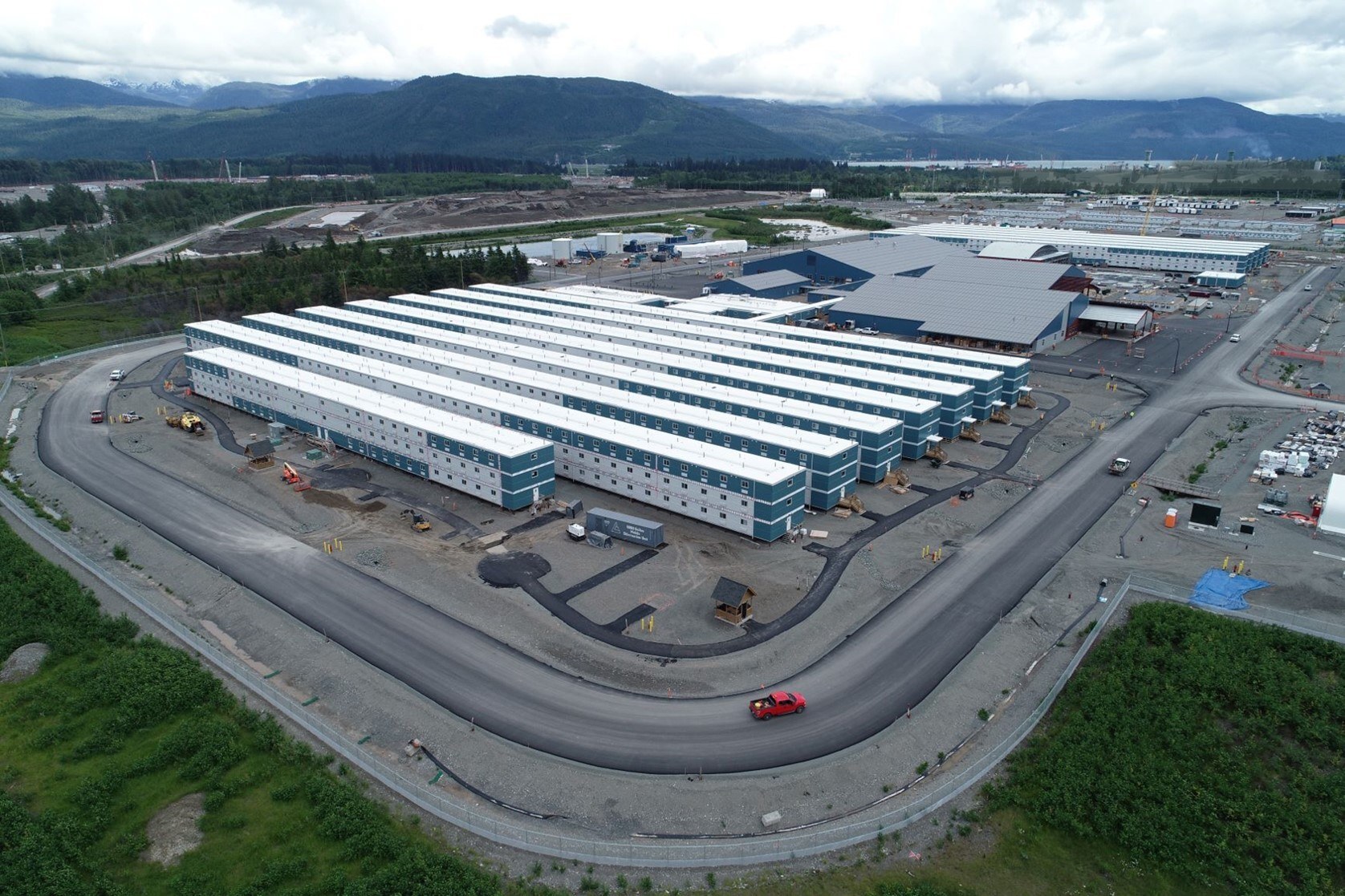
That sequence often reveals something important: a relatively modest building package may have very little schedule flexibility once it is tied to a fixed operational milestone. That is the exact moment a support building enters the critical path.
Remote Projects Have Less Capacity to Recover
Schedule recovery becomes significantly harder when the project is far from established labour and supply networks.
If a conventional building falls behind in a major city, additional trades, materials, or specialist support can often be brought in to recover time. On a remote industrial site, those options are strictly limited.
Additional workers require flights, accommodation, and site access. Replacement materials carry long lead times. Specialist trades may only be available during specific mobilisation windows, and local weather or transport conditions can narrow the window for field work even further.
A programme that depends heavily on recovering lost time at site carries far more risk than the schedule initially suggests.
Field Completion Needs to Be Deliberate
For suitable buildings, volumetric construction creates an opportunity to decide deliberately how much work should still be left for the remote site.
The objective is not to move everything into the factory—foundations, utilities, local interfaces, and final connections naturally belong on site. Rather, the goal is to evaluate which activities genuinely need to happen there.
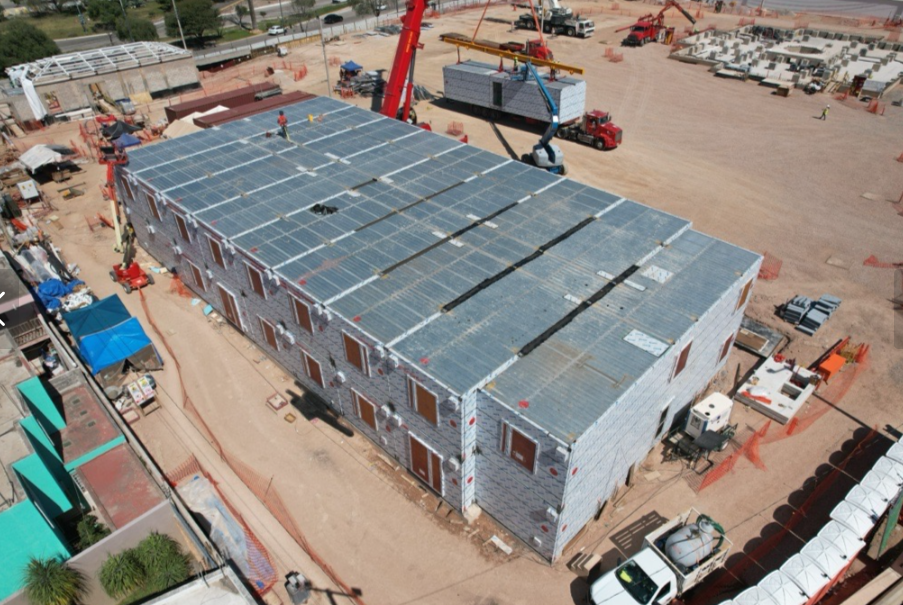
Every task left for field completion places another demand on remote construction resources, requiring additional labour, supervision, equipment, and access.
Before finalizing scope, the project team should ask:
- Which work genuinely needs to happen at site?
- What can be completed before the building arrives?
- Which trades will still be required after installation?
- Which remaining activities directly impact occupancy or commissioning?
Reducing unnecessary field work gives the site team a clearer, more manageable route to operational readiness.
The Site and the Building Have to Become Ready Together
Factory completion alone does not protect the programme. A building can leave manufacturing on time and still create major bottlenecks if the site isn't prepared.
Foundations may be incomplete, permanent services unavailable, cranage uncoordinated, or the receiving site unable to handle the planned delivery sequence. The reverse is equally problematic: a prepped site waiting on a delayed factory build.
The manufacturing programme and site programme require a shared readiness point. Before production begins, clarify:
- Site Readiness: When must the site be prepared to receive modules?
- Utilities: Which permanent services need to be energized?
- Post-Installation: What specific scope remains after module placement?
- Commissioning: How much testing is required before occupancy?
- Contingency: What happens if transport or site schedules shift?
These may look like standard construction questions, but their impact is entirely operational.
Measure the Consequence of Being Late
The right delivery strategy should be judged by the consequence of delay, not just the shortest construction schedule on paper.
If a support building can finish several months late without impacting the wider facility, schedule flexibility is acceptable. But if late completion restricts workforce mobilisation, prevents commissioning, or holds up operational handover, the building is programme-critical.
For remote industrial assets, the strongest delivery strategy is the one that gives the wider project the clearest path to having the right building ready at the exact moment operations need it.