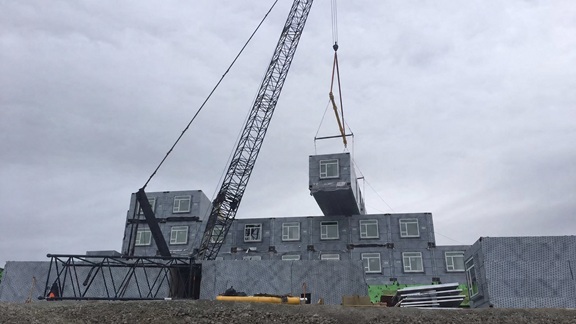
Integrated modular delivery means coordinating design, manufacturing, quality, logistics, and site execution as one unified delivery system, with clear responsibility at every interface from early design through handover.


Integrated modular delivery means coordinating design, manufacturing, quality, logistics, and site execution as one unified delivery system, with clear responsibility at every interface from early design through handover.
Takeaways
- A successful modular project is more than a building manufactured off-site.
- Design, manufacturing, QA/QC, transport, installation, and local construction must follow the exact same delivery plan.
- The real test of an integrated strategy is whether the complete system moves the project from design to final handover without gaps in responsibility.
A modular building can leave the factory in excellent condition and still run into severe, costly problems before it becomes a completed asset.
Manufacturing is only one part of the job.
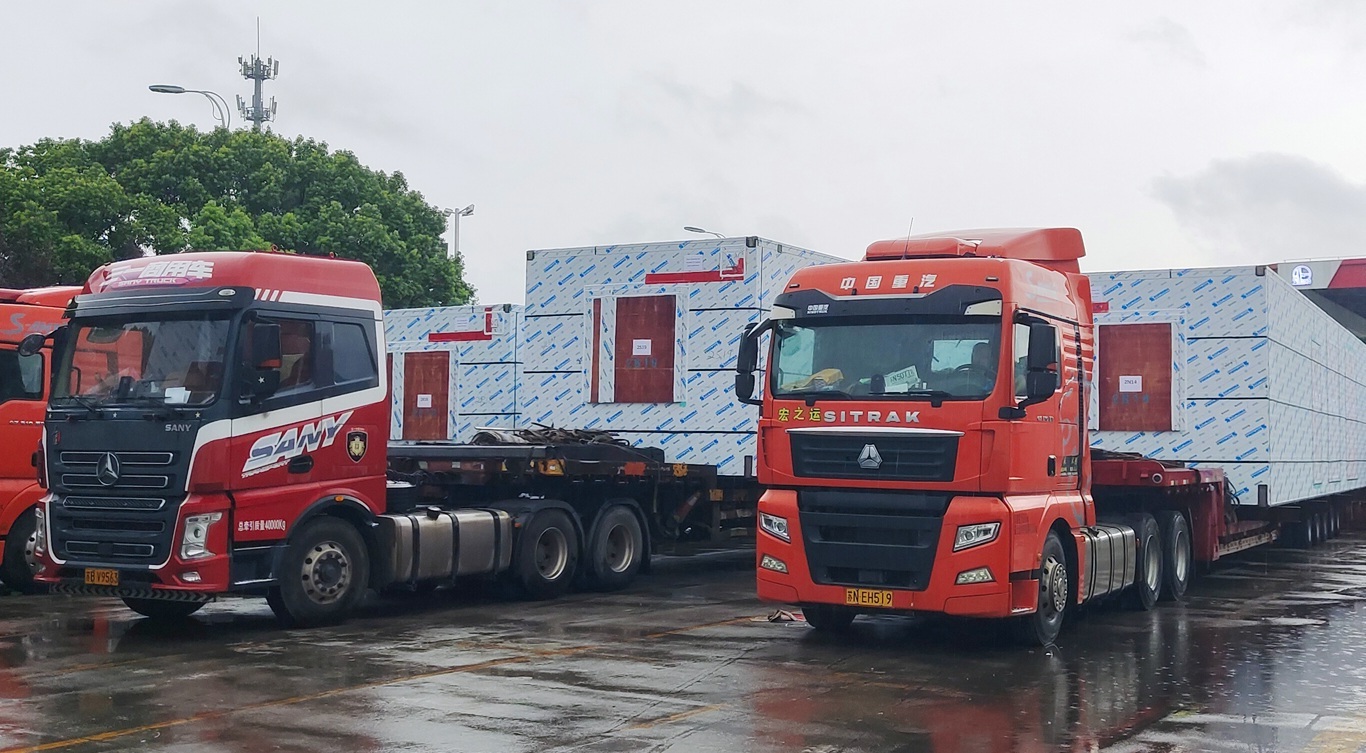
To succeed, modules must match the master design, meet strict project requirements, move smoothly through the planned logistics route, arrive in the precise installation sequence, and interface seamlessly with a site ready to receive them. Integrated modular delivery makes all of these moving parts work as one cohesive system.
The Project Has to Work as One System
Modular construction is often marketed around what happens inside the factory walls. But buyers aren't purchasing a factory process—they are purchasing a finished, functioning building.
That means the entire delivery sequence must connect seamlessly:
PRECON → DESIGN → MANUFACTURING → FURNISH → SHIP → STACK IT → OCCUPANCY
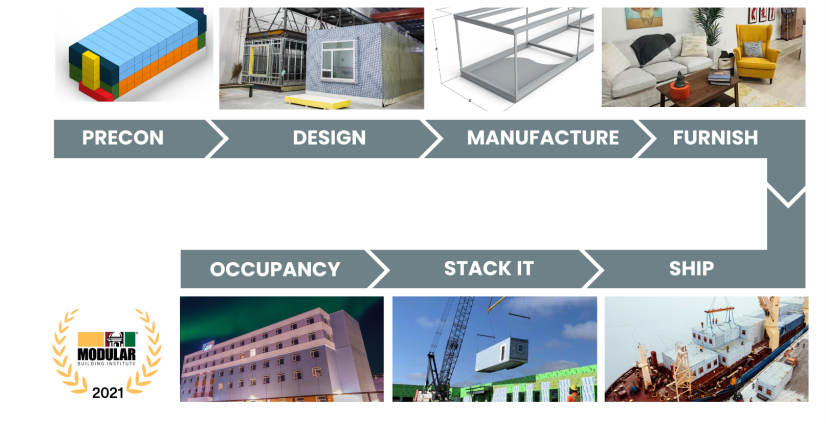
A weakness at any single stage compromises everything that follows:
- A module can be manufactured flawlessly, but if it arrives before the site is ready, storage and demurrage costs escalate.
- The site can be prepared, but if the delivery sequence doesn't match the crane installation plan, site operations grind to a halt.
- Scope can be clear to the factory team, but ambiguous to the local trade contractor responsible for final connections.
Integrated delivery brings these decisions into a single, coordinated master plan rather than leaving each party to solve its scope in isolation.
Design Decisions Have Direct Delivery Consequences
A module cannot be designed separately from how it will be manufactured, transported, and installed. Delivery constraints must actively shape the design from day one:
- Geometry & Dimensions: Directly dictate manufacturing efficiency, vessel loading, port handling, and road transit limits.
- Weight & Structural Interfaces: Determine crane size, rigging requirements, and structural connections on site.
- Service Interfaces: Dictate exactly what gets completed in the factory versus what remains for local site trades.
- Installation Sequence: Governs foundation readiness, access roads, staging areas, and site traffic management.
Resolving logistics, port handling, vessel capacity, and crane reach during early design is straightforward. Redesigning around these constraints after production starts is catastrophic.
Factory Scope and Site Scope Must Meet
 Every modular project splits work between off-site manufacturing and on-site execution. The primary question isn't just "How much can we complete in the factory?"
The real questions are:
- Where should each specific activity be completed?
- Who owns the exact interface between factory and site scopes?
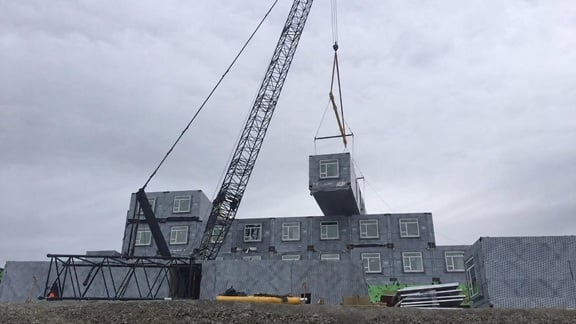
The team must clearly define what arrives pre-finished, which connections remain, who executes those connections, and what site conditions must be certified before modules arrive. When these scope boundaries are left vague, gaps appear at the worst possible time: when modules are hanging from a crane and the installation meter is running.
Quality Control Must Travel With the Project
Factory QA/QC is a primary advantage of off-site construction, but quality assurance cannot stop when the module leaves the production line.
Quality systems must maintain continuity between approved designs, factory inspections, logistics handling, and final site tie-ins. This visibility is vital when modules are manufactured long distances from the project site. Owners, general contractors, and consultants need clear visibility into:
- How quality checks are performed and documented.
- How code compliance is verified prior to dispatch.
- How individual modules are tracked through transit, offloading, setting, and final connection.
Discipline must travel with the module from the assembly line to final sign-off.
Offshore Manufacturing Still Requires Local Integration
Offshore or distant manufacturing does not replace the local project team, it makes close coordination with them essential.
The local general contractor remains indispensable for foundations, civil work, podium structures, building connections, and site readiness. Local engineers, consultants, and authorities having jurisdiction (AHJs) remain central to approvals and code compliance.
The modular manufacturer must operate as an integrated partner within the project team, not as an isolated vendor. The factory delivers what it does best in a controlled environment, local trades execute what belongs on site, and both operate off the same master schedule.
The Real Test Comes at the Interfaces
A modular strategy should never be evaluated solely by factory capability. Evaluate your project by asking these interface questions:
- Manufacturability: Can the architectural design be manufactured efficiently?
- Transportability: Can finished modules navigate the planned transit and shipping route?
- Installability: Can modules be safely handled and set with available equipment?
- Readiness: Will the site foundations and utility connections be ready upon arrival?
- Scope Clarity: Are factory-to-site work boundaries explicitly assigned?
- Schedule Alignment: Do logistics, manufacturing, and local site schedules line up perfectly?
If a project can transition through each of these stages without responsibility falling through the cracks, you have achieved true integrated modular delivery.