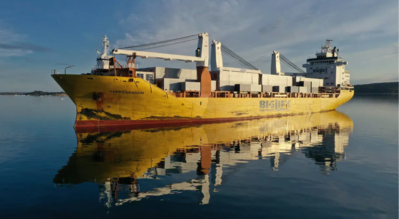
Structural steel volumetric tends to create the greatest delivery advantage when labour, climate, logistics, or programme constraints make too much of the project dependent on conditions that are difficult to control.

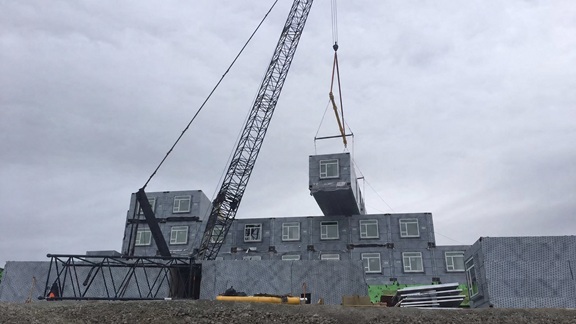
Structural steel volumetric tends to create the greatest delivery advantage when labour, climate, logistics, or programme constraints make too much of the project dependent on conditions that are difficult to control.
Takeaways
- Volumetric construction makes the most sense when it removes a meaningful project constraint.
- Labour shortages, weather exposure, difficult logistics, and programme pressure increase the value of moving repeatable work into a controlled factory environment.
- Difficult conditions alone are not enough. The building itself must also be structurally and geometrically suitable for volumetric delivery.
A project does not become a good candidate for structural steel volumetric simply because modules can technically be used.
The more useful question is: What problem would moving part of the building into a factory actually solve?
For some projects, conventional construction already has the labour, supply chain, site access, and programme flexibility needed to perform reliably. In those cases, changing the delivery method may offer limited benefit.
The equation changes when too much of the project depends on conditions that are difficult to control on site.
Start With What Is Difficult to Control
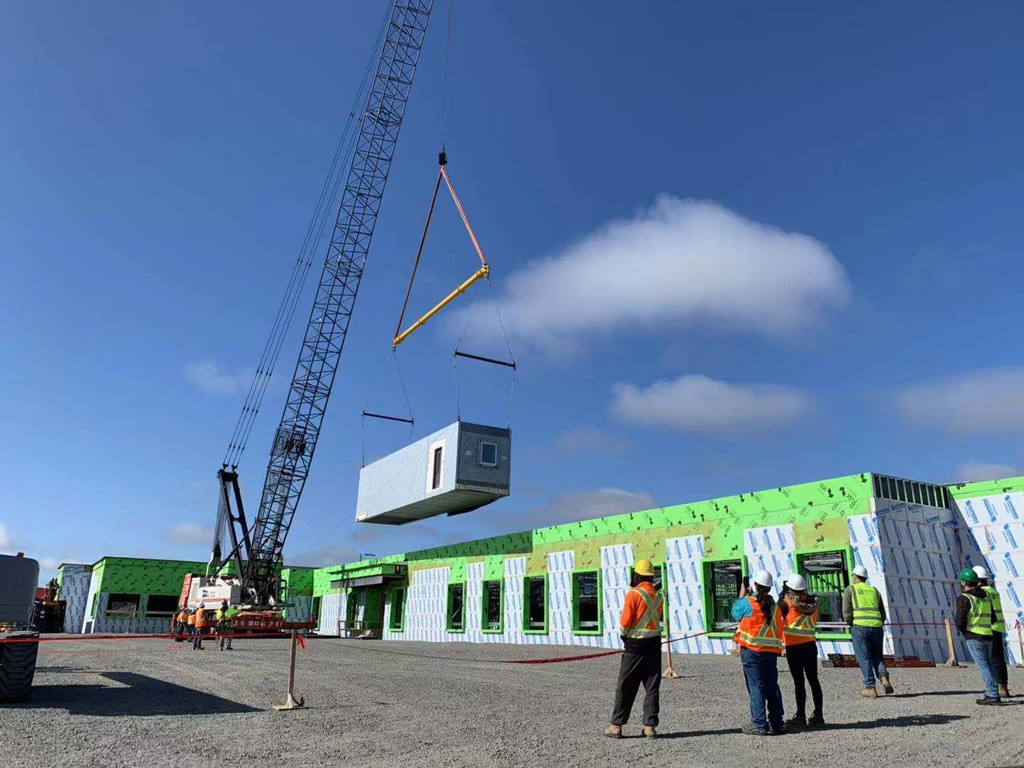 Structural steel volumetric becomes most relevant when critical parts of the construction programme depend on resources or conditions the project cannot reliably secure on site.
A remote project may have limited access to skilled trades. An island development may depend on marine freight and small-port infrastructure. A northern project may have a short construction season. A hotel may have a hard opening date that cannot move by six months.
These are very different projects, but they share the same underlying problem: too much of the programme depends on uncertain site conditions.
Moving suitable, repeatable work into a factory reduces that dependence.
When Labour Becomes the Bottleneck
A project can have an achievable design and sufficient capital, yet still struggle because the required trades are not available when the programme needs them.
This challenge accelerates in remote or high-cost markets, where specialist workers require travel, accommodation, supervision, and repeated mobilization.
Volumetric construction changes where that work happens. Instead of coordinating every repeatable activity at the final site, suitable scope is completed in a controlled factory environment before modules arrive.
.png?width=1280&height=720&name=hero-modular-assembly%20(1).png) The core benefit is not simply using less total labour, it is reducing the project's dependence on a local site labour market that may already be stretched.
The core benefit is not simply using less total labour, it is reducing the project's dependence on a local site labour market that may already be stretched.
When the Environment Controls the Programme
Weather can quickly turn an achievable construction schedule into an uncertain one.
Projects exposed to heavy rainfall, extreme cold, high winds, or short seasonal windows lose valuable site time even when the original schedule looks realistic on paper.

Factory production does not remove weather risk entirely. Foundations, transportation, cranage, connections, and final site stitching still happen outside.
What it does is reduce the volume of critical-path work exposed to those elements, ensuring fewer activities are completely dependent on favourable site weather.
When Logistics Are Already Complicated
Shipping large modules over long distances can appear complex, but the proper benchmark is what conventional construction would require in the same location.
A conventional project in a constrained location often requires hundreds of individual material deliveries, repeated trade mobilizations, worker housing, and ongoing reliance on local supply chains. Completing major building scope in the factory consolidates that delivery chain.
However, modular logistics must be tested early. Module dimensions, weight, vessel capacity, port handling, staging space, crane capacity, and the route from port to site dictate whether the system is viable.
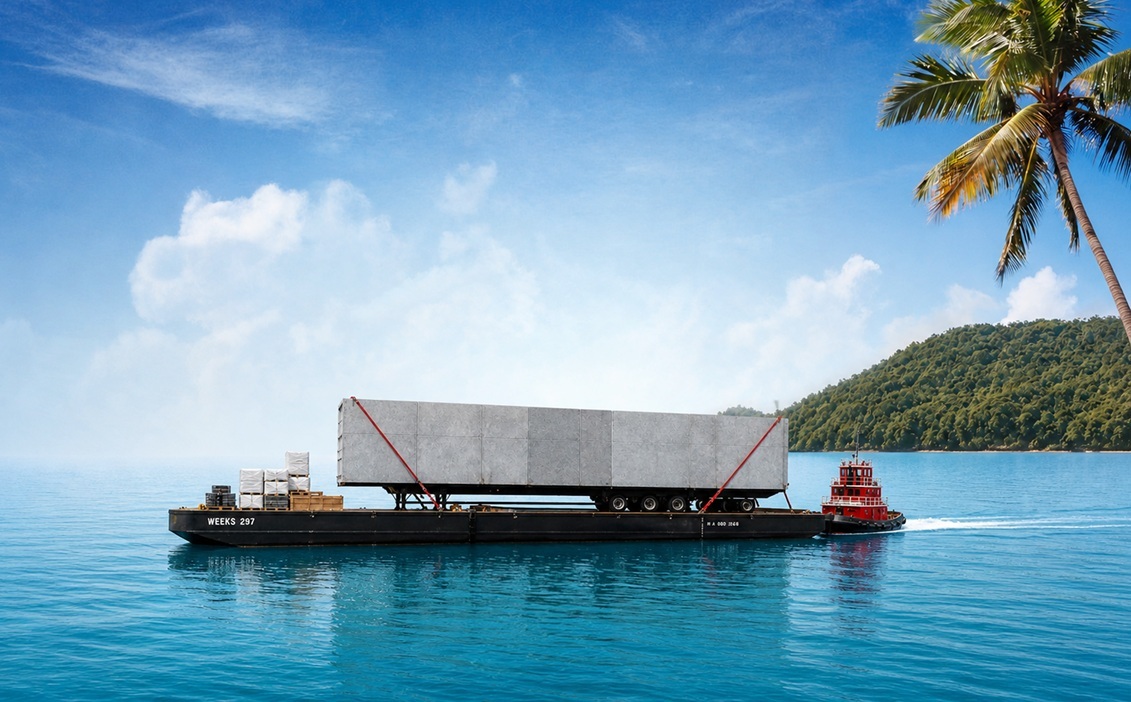
The question is not whether logistics are difficult, but which delivery method manages those logistics more effectively.
When the Date Matters as Much as the Build
Programme pressure becomes commercially critical when completion is tied directly to revenue, occupancy, or fixed operational commitments:
- Hospitality: Meeting a peak seasonal opening date.
- Residential: Hitting committed tenant occupancy windows.
- Industrial: Aligning support facilities with workforce mobilization or commissioning.
In these situations, the key advantage is not just manufacturing speed, it is parallel processing. While foundations and underground utilities are being executed on site, modules are manufactured in the factory simultaneously.
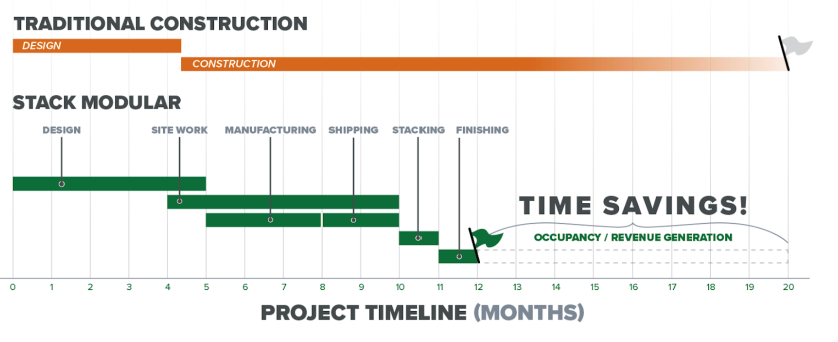
When fixed completion dates carry real commercial consequences, delivery certainty becomes part of the project's financial value.
Difficult Does Not Automatically Mean Modular
A difficult site makes volumetric construction valuable, but it does not automatically make the building suitable.
The project must still be rigorously evaluated for:
- Repetition and module geometry
- Structural framing strategy and load paths
- Module boundaries and transport limits
- Interfaces between factory-built and site-built scope
Project constraints explain why volumetric construction may be valuable; building suitability determines whether that value can actually be captured.